CENTURION Mini Product Catalogue

Showing posts with label gate motors. Show all posts

Wednesday, 14 June 2017

Why Automate? The Benefits of Gate Automation

As members of the human race, the desire – or, to be more accurate, the need – to protect what is ours, is inborn.  Thousands of years of evolution have ensured that we will fight tooth and nail so that no harm will to come to us, our loved ones, or our possessions.  Whenever we are in danger, those little evolutionary alarms go off and our bodies offer us two choices:  either run away or stand and fight.  This is what psychologists call the fight or flight response.

But modern technology provides us with a third alternative:  prevent.  What if we didn’t have to stand and fight but didn’t exactly have to turn tail and run, either?  We can efficiently protect what is ours by simply making good use of the tools that the Cyber Age has given to us.

Gate motors have been around for the last two decades or so and, much like us, they have also evolved to be quick-thinking, robust machines that are able to relentlessly guard our homes and offices like unflinching sentinels.   They also serve as faithful servants, opening and closing our entrance gates without so much as a word of objection – it’s what they were built to do.

The benefits offered by gate motors are manifold, and we will now look at some of them.  We’ll also discuss a very close relative of gate automation, namely access control.

1. Safer

The obvious detriment to one’s lumbar region aside, getting out of your vehicle to open a gate can be extremely hazardous from a personal safety perspective.  We’ve all heard of people getting hijacked or attacked while opening their gates.  Having a gate motor installed may not eliminate this possibility entirely, but it will certainly reduce the likelihood.  Some modern gate motors have adjustable speed settings, meaning that you can have your gate open and close rapidly and thus reduce the time that the gate is open and also the time that you are stationary in your vehicle.  There are also some particularly advanced operators with innovative features such as beam automatic closing, whereby the gate closes the moment that the safety beams have been cleared.

2. Convenient

Why go through all the effort of stopping your car, getting out, and then straining your poor, long-suffering back just so that you can get into your own property?  It is certainly much more convenient to simply press a button and let your gate motor do the rest.  Gate motors also offer you considerable freedom when it comes to the manner in which you will activate it, since you can connect anything from a remote receiver to an intercom and use that as a triggering device.  There are even GSM-modules that allow you to trigger your gate using your mobile phone.  It doesn’t get more convenient than that, especially in an age where our phones have become extensions of our arms.

3. Versatile

Yes, gate motors do open and close gates, but there are several models on the market that do so much more than that.  Some models provide onboard timers, allowing you to set automatic activations or to bar certain inputs from working at set times, while others can be interfaced with third party alarm systems and infrared beams so that you’re notified when would-be criminals are loitering in front of your gate.  It’s easy to see how a device that once had a singular purpose has now become a compact electronic defence force.

4. Total control

As I mentioned in the introduction to this article, we’ll also take a brief look at access control.  Now, access control is rather a broad term and can refer to any number of devices including keypads, proximity card readers, GSM-modules, traffic barriers and of course gate motors.  The wonderful thing about access control is that it affords you total control over who enters (or leaves) a property.

Some variants, particularly proximity tag readers, can be interfaced with computers and allow the user to upload transaction logs, edit functionality remotely, selectively add and delete users, etc.  This does its bit for convenience as well as security.

Innovation in the field has also ensured that no matter what your automation requirement – whether you have a swing or sliding gate, light or extremely heavy, whether you require automation for your home or business – there is bound to be a gate motor and/or access control system out there for you.

So don’t wait:  Automate!

Tuesday, 13 June 2017

Pat Dickens: A Partner of Possibility

Centurion Systems’ sprawling, labyrinthine manufacturing facility in North Riding, Johannesburg, is a shrine in honour of human ingenuity, a vast monument of the marvels that humankind can accomplish if given the correct tools. For within the 15,000m² premises, a veritable agora of great minds interface with some of the most advanced and sophisticated equipment that the world of engineering has to offer to design and produce our winning access automation solutions. 

From the R & D wing where engineers go about their important work in scholarly silence to the hive of activity that is the factory floor, every square inch of the building speaks of a truly world-class facility.

The company’s manufacturing base recently hosted pupils and teachers from the Ferndale High School who were split into four groups and led on an extensive tour of the facility conducted by none other than MD Pat Dickens himself as well as business development department head Ant Williams, network engineer Tim Dickens and trainee project manager Corne Janse van Rensburg.

The pupils, who are all interested in pursuing a career in engineering or related fields, were introduced to some of the advanced software and equipment – which includes robotics and state-of-the-art SMT machines - used in the design and manufacture of our products.

Asked how the factory tour came about, Pat explains that it formed part of a youth development initiative of which he is an active member.

“I am part of an organisation called Partners for Possibility (PfP) which was started in Cape Town by a lady called Louise van Rhyn. The idea is to get business leaders in the industry to partner with school principals to help them run their schools more professionally. At the end of last year, I therefore partnered with Ferndale High School which serves the Randburg, Ferndale, Bryanston and surrounding areas”.

He went on to say that one of the organisation’s goals is to improve the pass rate of the learners, where learners become fully engaged in a learning experience that will transform them into well-balanced citizens having a strong set of ethics and values that will be cherished by future employers.

“In that vein, I asked the grade 10, 11 and 12 learners who are particularly interested in pursuing an electrical or electronic career to visit CENTURION in order to see a typical company involved in things electrical”.

In total, around 60 learners attended the factory tour.

Tuesday, 23 May 2017

Check the Motor!

His hair may have been a little darker and fuller, the smile lines at the corners of his mouth – like tattoos of happy memories – a little fainter, but there can be no doubt that the man in the photograph wearing the smart navy-blue shirt and piebald tie is CENTURION MD and founder Pat Dickens, a man who, as a fresh-faced young engineer from Kimberly, dared to dream at a time when dreaming was all but outlawed. 


Could the man in the photo, taken from a sizeable stack that marketing director and Pat’s brother-in-law Richard Rohman lovingly keeps in his desk drawer, have known that, some day, his gate motors would be used on virtually every electric gate in South Africa? And would he have believed it if someone had told him that, in the near future, his solutions would automate the entrances to apartment complexes, office parks, airports and palaces? There’s no way of knowing for certain, but the man in the picture has a fire in his belly, a fire that he would not allow financial hardships, economic recessions or the hordes of naysayers that told him it couldn’t be done, to extinguish.


As CENTURION’s co-founder and someone who has been with the company virtually from the very beginning, Richard Rohman appears in many of the grainy old photographs, sometimes mustachioed and sometimes sans facial hair. Now in his fifties, Richard is as much an energetic firebrand as he was in those early days. He has since traded in his box-shaped Volkswagen Jetta for a vehicle that epitomises Richard's love for adventure and the outdoors, and nowadays one is more likely to find him poring over an Excel spreadsheet than fiddling with a multi-meter, but Richard was absolutely indispensable in securing CENTURION’s legacy as the undisputed leaders in gate automation and access control


Another picture shows the SupaSlida, the seminal sliding gate motor that laid the foundation for future successes such as the D5, of which there has been some 700, 000 sold to date. With the release of the D5-Evo – the evolution of the D5 footprint which added an intelligent LCD interface and sophisticated motor control, among other features – CENTURION achieved superstar status within the world of access automation. The original D5 slider built upon a bedrock of reliability, and the Evo’s addition of futuristic technology launched the brand into the stratosphere.


From the lush mountains and valleys of the Mpumalanga province to the vast open planes of the Free State, from Tswhane to Table Mountain, South Africans – and people the world over – simply love the green CENTURION motors. So the next time you’re out and about, be sure to #CheckTheMotor!

Tuesday, 2 May 2017

5 Reasons Why the D5-Evo is South Africa’s Favourite Gate Motor

In these turbulent, uncertain political and economic times – with countrywide protests calling for the resignation of the sitting president, a controversial cabinet reshuffle and a downgrade to junk status – it’s become more necessary than ever before to reflect on what it means to be South African.

Certainly, these recent events have shaken our faith in many of the foundational truths that we have always taken for granted, and have challenged our resolve to keep pushing for the deliverance of the country of our birth.

So, what does it mean to be South African?
Copyright: bondsza / 123RF Stock Photo

Ask any recent émigré what it is that they miss most about South Africa, and they’re likely to wax lyrical about the warmth of the people and a certain sense of connectedness that they haven’t been able to find anywhere else. Indeed, the uniquely South African concept of Ubuntu ­speaks volumes about the emphasis most South Africans place on community


We also know a good thing when we see it. We value robustness, fortitude and dependability. Case in point, South Africans simply love our D5-Evo sliding gate motor for domestic and light-industrial applications. Here are five reasons why:

Supremely easy setup

Copyright: jirsak / 123RF Stock Photo
The D5-Evo represents a unique dichotomy, namely our love affair with all things high-tech combined with a penchant for simplicity; it’s the futuristic sensibilities that have always been so at home in the CENTURION stable processed through the engine of compelling innovation to deliver the ultimate in intuitiveness. Boasting an intelligent LCD plug-and-play interface, the controller utilises an appropriately-named Setup Wizard – with graphics - to guide you through the limit setup procedure.

Even if the lights go off, you can still get in

While load-shedding seems to be under control for the time being, it’s still nice to know that one isn’t completely at the mercy of a power grid that’s unstable at the best of times, especially when it comes to your home’s security. We pioneered power failure protection in gate motors, so in line with all our other operators, the D5-Evo sliding gate motor carries on guarding your entrance even when the lights go out, and you won’t be left out in the cold impotently shaking your fist at a recalcitrant gate, either.

Safe anti-crushing protection

The D5-Evo’s controller remains, without a doubt, one of this gate motor’s most compelling trump cards, thanks in no small part to the inclusion of sophisticated motor control circuitry, ensuring smooth acceleration and deceleration a far cry from the frantic, jerky and frankly unsettling movements of older products. Besides the obvious aesthetic benefits, the complete control exerted over the motor enables us to make the collision detection system even more sensitive to obstructions. This translates into greater end-user peace of mind.

Packed with features to keep you and your loved ones secure

From the novel Intruder-detection Alarm feature-set to time-barring of inputs and beam Autoclose, the D5-Evo controller runs the gamut of high-security features.

Seamless integration

While the D5-Evo works perfectly well as a standalone access automation solution, it’s remarkably easy to accessorise your gate motor for a well-rounded blend of security and convenience through integration with, among other accessories, intercom systems, keypads, infrared gate safety beams, pedestrian key-switches and external receivers.


Monday, 27 March 2017

6 of the Best Italian Inventions

Copyright: ekaterinabelova / 123RF Stock Photo
The mere mention of Italy conjures up images of quaint, cobblestoned streets, gorgeous villas and breathtaking architecture steeped in history from the Age of Enlightenment. This tiny Mediterranean country has given us Giorgio Armani suits and some of the finest luxury sports cars that the automotive world has to offer. 


This week, we have the privilege of hosting five directors from our parent company, FAAC, headquartered in Bologna. In honour of their visit, here are six of the best Italian inventions:

Ballet

One of many expressive art forms to be born from the Renaissance – a period of artistic, spiritual and scientific awakening in Europe between the 14th and 17th centuries – ballet was invented and performed for the first time in Florence.

The espresso machine

Enjoying that cup of Joe this morning? Turns out we have the Italians to thank for that, too! The espresso machine was invented in 1903 by a man called Luigi Bezzera in an effort to speed up the coffee-making process. Luigi, thank you for making mornings bearable! We owe you an eternal debt of gratitude.

The induction motor

The Italians have given us some truly great inventions in the fields of science and technology, and few have been more influential than the induction motor. Invented by Galileo Ferraris in 1885, the induction motor is an AC electric motor that uses electromagnetic induction to generate current which in turn produces torque.

Jeans

Copyright: kiuikson / 123RF Stock Photo
That’s right, arguably the most popular item of clothing is, in fact, another Italian invention. The very first pair of jeans originated from the City of Genoa. Can you imagine countless cowboys and rockers strutting their stuff in corduroys? We didn’t think so.

Batteries

It is nearly impossible to imagine a life without batteries. We use them in our mobile phones, laptop computers and various other everyday appliances (including our gate motors!) and enjoy the autonomy provided by history’s most robust and enduring power storage device. The very first electromechanical battery, the voltaic pile, was built by Alessandro Volta (who else?) in 1800.
Copyright: vladru / 123RF Stock Photo
The FAAC bollard

While the bollard itself might not be an Italian invention (the origins of this traffic control device are somewhat obscure, but it seems to have its roots in maritime equipment), FAAC's contribution is a homage to good old-fashioned engineering excellence and emphasises robustness and durability. The design of FAAC's bollards bespeaks Italian flair combined with an all-round beefiness that makes them suitable for virtually any traffic control application. 

Monday, 20 March 2017

Keep Important Settings Safe and Secure with CENTURION's Memory Module

No fewer than 80 programmable features can be found on a D-Series controller, ranging from high-security features such as the beam alarms, to intelligent timer functionality and safety enhancements.
Copyright: profotokris / 123RF Stock Photo

As someone with an obvious proclivity for fragrant cooking once said, variety is the spice of life. If that is indeed the case, then the D-Series range of gate operators offers a flavoursome spread that is guaranteed to entice even the most refined of palates; a delicate pairing of futuristic technology and user-centric intuitiveness with a soupcon of old-school durability

This vast array of settings can be problematic, however, should the day ever come that one has to replace an existing controller and transfer all of its settings to a new unit. Was Autoclose enabled? What was the operating speed set at? Was there a pre-delay configured?

As a special tie-in with our Service Exchange Programme, we’re relaunching our must-have Backup Memory Module with a stylish new look and durable enclosure. If you regularly install and service CENTURION D-Series gate motors, this is one accessory you simply can’t afford to be without.

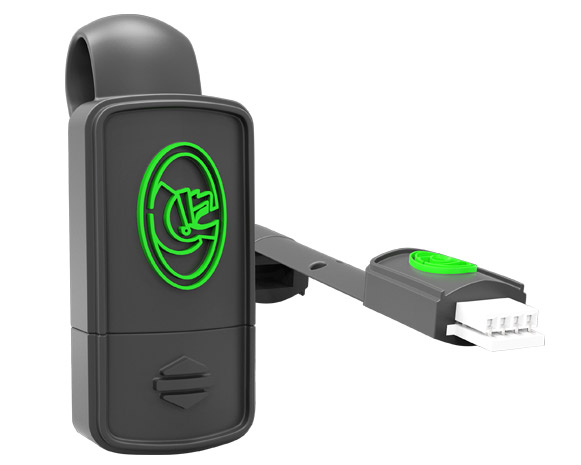
Above: the CENTURION Backup Memory Module
Use the Backup Memory Module to effortlessly back up important settings, ChronoGuard time-periods and even remote buttons and restore them on a new or existing controller just as easily. The module simply plugs into the controller’s BID port (where the DOSS harness is usually connected) and works in much the same fashion as a memory stick, but has been specially designed to keep settings configured on your D5-Evo, D10, D10 Turbo or SECTOR/SECTOR II safe and secure.

And it’s supremely easy to use! For more information, please visit our website or order your CENTURION Backup Memory Module today by giving us a call on +27 11 699 2510.


Friday, 17 March 2017

5 Tips to Help You Sleep Better Tonight

Copyright: yuriisokolov / 123RF Stock Photo
Fact: sleep is good for you. It ranks right up there alongside drinking plenty of water and not forgetting your wife’s birthday under the category “things that will make you live longer”. Getting enough sleep improves focus, helps with stress and yes, it can even increase longevity according to some studies. The optimal number of hours of quality sleep required depends largely on one’s age and unique genetic composition, but most experts place the figure at between 7 and 9 hours for a healthy adult. 

It is also important that the sleep you do get is sufficiently deep and restful in order for it to be considered beneficial. So-called “light” (or non-REM, stage 1 and stage 2) sleeping, tossing and turning and frequent waking does not constitute quality sleep, and is likely to leave you feeling tired and agitated the next day.

But, with the mounting pressures and worries of everyday life – work, money, relationships – many of us may find quality sleep eluding us and consequently our health and overall performance of daily tasks are affected in a negative way.

Here are some tried and tested tips for getting a good night’s rest.

Take it easy on the caffeine

Copyright: capacitorphoto / 123RF Stock Photo
Caffeine (the active ingredient in coffee) is a powerful central nervous system stimulant, which means that it has a “perking up” effect, making a person feel more awake and alert. The problem is that, if you overdo it or enjoy coffee too close to bedtime, your CNS will become overstimulated, you’ll become “wired” and find it difficult to “switch off” and fall asleep. Also, don’t be fooled into thinking that caffeine is only found in coffee. Some tea varietals and even chocolate contain considerable amounts of the substance!

Do some light exercise

The health benefits of exercising have been well-documented. From improving cardio-vascular performance to burning fat, there aren’t too many cases to be made against hitting the gym! But did you know that getting the blood pumping an hour or two before bedtime can actually help you sleep better? Experts caution against exercising too close to bedtime, however, as your breathing and heartrate may require some time to return to normal levels.

Stick to a sleep schedule

Our bodies love routine, and severe deviations from our daily schedules have the tendency to jolt the system and disturb our bodies’ equilibrium. Try to go to bed and wake up at more or less the same time every day to keep your body – and mind - happy.

When you switch off, really switch off

This is becoming increasingly difficult to do in a technology-driven and obsessed society. Even when the lights are off, cellphones, tablets and television sets cast their spectral glow and remind us that we’re never truly disconnected from the world. This, as it turns out, is not a good thing. How many of us can truthfully say that we don’t use our mobile devices in bed, checking emails, chatting, playing games, etc.? As difficult as it may be, we need to condition ourselves to completely switch off the moment that we get into bed.

Stop worrying

Because it’s that easy, right? Not quite. Worry is one of the leading causes of not getting proper sleep, and contributes to a plethora of other health issues including strokes and heart attacks, stomach ulcers and, according to some studies, even cancer. Excessive worrying also leads to a compromised immune system, which essentially means that your body lets down its guard. There are plenty of ways to tackle excessive stress such as meditation, exercise and, in extreme cases, seeking professional help.

We care about your peace of mind! Don’t lose sleep worrying whether your gate motor will be there in the morning. Fit a theft-resistant cage from the leaders in access automation.

Monday, 6 March 2017

Fantastic Installations and Where to Find Them

Back in 2001, all of fandom rejoiced as bestselling fantasy novelist J.K. Rowling announced that she was penning a new novel in the Harry Potter canon – a prequel of sorts this time – called Fantastic Beasts and Where to Find Them, and last year the book was adapted for the big screen and joined the pantheon of films that are the reason that Miss Rowling lives in a castle. But I digress. 

The story follows the fantastically-named Newt Scamander (which also happens to be the nom de plume that Rowling used when she wrote the novel), a writer and renowned purveyor of all things mythical, as he travels to 1920s New York in search of more fantastic beasts to document in his authoritative work. However, chaos ensues when several creatures escape from Newt’s magically-expanding suitcase and the protagonist must do everything in his power to stop the two worlds that exist side-by-side from colliding.


While we certainly don’t claim to be experts on finding fantastic beasts (the Kruger National Park is probably a good place to begin one’s search), we do know where to find a fantastic access automation installation, or three, as evidenced by these winning sites from around South Africa. 


Automated pool deck


What: A 5300mm x 3400mm wooden pool deck fully automated using a sliding gate motor


Where: Lichtenburg, Northwest Province, South Africa


The hardware: 1 x CENTURION D5-Evo 500kg sliding gate motor


Installer: JD Elektries, Lichtenburg jd@jdelektries.co.za 


Stargazing bed on rails


What: A fully-automated, retractable stargazing bed on which to whisper sweet nothings into your beloved’s ear under a bejeweled night sky with the gentle murmur of the Vaal as background music


Where: On the Vaal river near Parys, Free State, South Africa


The hardware:
1 x CENTURION D5-Evo 500kg sliding gate motor


Installer: Derk van den Brink dmvandenbrink@gmail.com


Moving targets


What: Exactly what the name says


Where:
The Mpumalanga traffic department training college, Mpumalanga, South Africa


The hardware:
8 x D2 Turbo 250kg sliding gate motors


Installer: Pulse Electronics, Nelspruit pulse.electronics@vodamail.co.za


Friday, 18 November 2016

CENTURION vs. Nature

Mother Nature is a notoriously fickle – and at times downright ruthless – dame. While she may occasionally do something whimsical like giving us a monkey’s wedding, there are also times that it’s quite evident that she’s had a fight with her boyfriend or something. This year especially was fraught with meteorological curve balls including, but not limited to, tornadoes. Freaking. Tornadoes.

It’s also starting to become pretty clear that Al Gore was onto something with the whole global warming thing. According to NASA’s Goddard Institute for Space Studies, Earth’s overall temperature has increased by 0.8°C since 1880. While this may seem insignificant, the effects are dramatic and far-reaching and, regrettably, climate change is showing no signs of slowing down.
Earth's overall temperature has increased by 0.8 degrees centigrade since 1880

While there’s not too much that we can do about the weather, we can set your mind at ease by telling you that CENTURION products have been designed to handle very extreme environmental conditions.

According to senior electrical engineer Tony Baia, reliability as a design philosophy and something to be sought with relentless fervour has been ingrained in CENTURION’s DNA since the very beginning.


CENTURION senior electrical engineer, Tony Baia
“From its inception,” begins Tony “Centurion Systems’ founding fathers and design engineers understood that, to ensure the reliability of its now-famous D5 [sliding gate motor] and other electronic products, they had to tame one of nature’s most awesome and powerful phenomena: lightning”.

Lightning has for long been the bugbear of electrical appliances, the lure of so much sweet, conductive metal in one spot simply too much for heaven’s own electricity to withstand. It’s a siren song as old as time, but the tune is no easier to hum along to. Every year, insurance companies pay out millions in lightning-related claims, and some firms do not compensate for lightning damage as it’s seen as a vis major.

“With this in mind,” continues Tony “the design engineers approached the CSIR [Council for Scientific and Industrial Research] and other institutions who had the equipment and knowledge to tame lightning.

“A cost-effective and highly efficient circuit was designed that has remained with Centurion Systems to this very day, ensuring that our control cards continue to function when other equipment has failed”.

Tony provides a detailed description of the kind of technology that goes into such a sophisticated and robust piece of equipment.

“CENTURION uses a layered approach to protect against lightning; all inputs exposed to the outside world are protected by multiple components”.

Layer 1

Right up front is a high-power resistor that absorbs and slows down the lightning surge.

This is followed by a Zener (analogous to a clamp) that prevents the lightning-induced voltage from going above levels that are harmful to the rest of the electronic components on the PC board.

Layer 2

The lightning-induced voltage sometimes climbs much faster than the Zener is able to respond; to further protect the sensitive electronic components, another capacitor and resistor are used to slow down the rising voltage allowing the Zener time to respond and clamp the harmful voltages.

Layer 3

The TRG [trigger] input is the one that is most exposed to lightning surges due to it having the longest connection length – this connection could run from the gate motor all the way to the indoor intercom system.

To ensure that this input has even more protection against lightning surges, a gas arrestor is placed in front of the high-power resistor to further absorb the energy of the lightning surge.

Level 4

To protect against lightning surges, the energy that is being absorbed by the abovementioned layers needs to find a path to earth or ground; to achieve this, another gas arrestor connects to the mains power supply earth.

Level 5

CENTURION power supplies like the CP84SM have an earth tab that connects to an earth spike, allowing the lightning surge energy to find a very quick and easy path to earth, thereby avoiding damaging the sensitive electronic components on the control card.

Layer 6

The power supplies like the CP84SM also have protection against lightning surges coming down the municipal power lines. These take the form of metal oxide varistors, or MOVs. MOVs limit the voltage supplied to an electrical device by either blocking or short-circuiting to ground any unwanted voltages that are above a safe threshold.

“Lastly,” Tony concludes “it must be remembered that, if the lightning surge is too powerful or too close to the gate motor then something has to give. That is when most of the components referred to above will be damaged, sometimes leading to unseen damage of other components on the PCB”.

In addition to superior lightning protection, CENTURION operators boast a number of sophisticated design features intended to moderate Ma Nature’s onslaughts. These include:
  • · Insect-ingress protection – insects are a big problem throughout continental Africa
  • High water-level lines for reasonably good immunity to flooding
  • Black-out and brown-out failure protection – CENTURION’s products are purpose-built to address these classically Third World-type infrastructural problems


Friday, 14 October 2016

5 Ways That the NOVA HELIX Will Make Your Life Easier

The NOVA HELIX range of remote control receivers is putting a fresh spin on an access control staple.

While the original NOVA range has enjoyed – and continues to enjoy – widespread popularity due, in part, to its role as a pioneer in the use of code-hopping technology, the NOVA HELIX was designed to serve the installer at least as much as the end-user.

This latest incarnation of the trailblazing NOVA receiver has retained its ultra-secure code-hopping protocol (and is in fact backwards compatible with the blue and gray NOVA remotes), but its feature offering has been beefed up considerably by the addition of a number of fantastic new features aimed at making life easier for the installer.

Here are five ways that the NOVA HELIX will make your life easier:

1. The pulse time is adjustable

For the first time, it is possible to adjust the time that the relay remains energised, making it possible to activate, for example, electric locks without needing to fit additional interfaces such as pulse-stretchers. Output timing is native to the NOVA HELIX.

2. Timed Autolearn

This is an incredibly useful feature that enables the user to specify a time-period (for example 24 hours) during which all remote buttons that are pressed in the vicinity of the receiver will be programmed into memory. This is useful in instances where a large number of remotes need to be programmed but it’s difficult to have all the remotes present at the same time. The Autolearn function automatically times out after seven days.

3. Robust, interference-free remote learning

Has a customer ever phoned you up and complained that, despite him being 99% sure that his property is ghost-free, his gate frequently opens on its own? This seemingly poltergeist-related phenomenon is generally caused by a neighbour, or neighbours, with the same remote control system pressing his or her remote at the time of your confused client’s remote being programmed. This causes the neighbour’s remote to be inadvertently learned into your client’s system, causing all sorts of havoc and hijinks.

With the NOVA HELIX’s five-second-press feature, the remote button has to be pressed and held in for a period of five seconds before it is learned into memory.

4. Master and Link Learning

The NOVA HELIX gives you the option to choose between the ironclad security of Master Learning, and the convenience of Link Learning. With Master Learning, the Master remote has to be present in order to create “offspring” remotes, making for a very robust and secure remote learning methodology. However, for sites where security is not an issue, remotes can be effortlessly programmed by simply bridging the link pins and momentarily pressing each button that you wish to code.

5. Function jumpers can be disabled

The beauty of the NOVA HELIX really lies in its flexibility. If you want to enjoy the time-saving convenience of Link Learning but your client is concerned about security, you can set his mind at ease by disabling the function jumpers so that the system can’t easily be breached by would-be intruders wanting to program their own remotes into memory.

Monday, 29 August 2016

Soul of a New Machine: The Legend of the D5-Evo (Part 1)

The so-called Information Age has meant massive changes in virtually every aspect of our lives: from the way in which we communicate to the way in which we consume information. By the second half of the 20th century, every interface was undergoing a dramatic facelift and becoming slimmer, lighter and, above all else, smarter, embracing the Brave New World that the techno-prophets and digital pioneers in Silicon Valley promised. CDs were being replaced with iPods, CRT with flat screen and dial-up with fibre, and all over the world the citizens of this planet were experiencing a connectedness that had never before been possible. Then came the mysterious and ethereal Cloud, and the digital game changed yet again. Suddenly, physical storage devices were going the way of the dinosaurs and information and media started to live in the ether, mere ghosts consisting of ones and zeros. Technology seems to be in a state of constant flux, as well it should be if it is to remain the faithful servant of Mankind’s diverse needs.

But, in 2009, the world of access automation was in need of a hero. Despite some groundbreaking innovations such as battery backup and rolling code technology, it had not yet fully caught up with the evolution that was sweeping through the technosphere. But the winds of change were about to reach the security sector, and their arrival signaled the birth of a true access automation legend.

The D5-Evo built upon the equally legendary foundation of its predecessor, the original D5 - an access automation staple if ever there was one – incorporating the same tried and tested mechanical design. CENTURION marketing and sales director Richard Rohman explains some of the thinking that went into the design of the original D5 sliding gate motor:


“When we were developing the D5, we looked at the beautifully-moulded and machined Italian operators that were, at the time, hammering some old tin box-looking operators at every turn. But we were worried about our ability to die-cast the gearbox as well as the out-of-mould machining still needed to be done. It was for this reason that the injection moulders across the road from us at the time suggested we try producing a gearbox using the latest in injection mouldable engineering polymers. It worked and worked well, to the extent that it became the norm for all locally-produced gate motors in South Africa”.

However, it wasn’t all smooth sailing back in those early days, as Richard is quick to point out.

“Then came the quest to get rid of the horrible limit switches. Pat [Dickens, CENTURION MD] and I walked a long, hard road with this one, moving from traditional limit switches to optical limits and then back to really robust limit switches to finally our only locally-made limit switches, all of which were far too costly and cumbersome to install. Hence, the development of the DOSS (Digital Origin Seeking System), which is a story on its own”.

As the country’s security situation continued to deteriorate and it became increasingly necessary for homeowners to get into their properties as expeditiously as possible, speed became another critical consideration. The engineer overseeing the development of the original D5 was tasked with ensuring that the machine went no slower than a robust 16 metres per minute.

“[We] had to get clever with speed control on the D5,” Richard remembers, “because it was always a complaint with installers of competitor products that their faster machines weren’t very accurate when it came to stopping; when the motor reached its end-limit.”

This shortcoming prompted CENTURION’s design team, under the supervision of Ian “Roz” Rozowsky (who would later become the Research and Development director), to design the D5’s electronic controller – the now-famous CP80 – in such a way that smooth acceleration and deceleration could be achieved, a feature that was perfected with the D5-Evo.

The landscape at the time (around 1996) was somewhat desolate in terms of functionality, with the vast majority of gate motors on the market offering little more than simple opening and closing of their loads. However, the growing concerns around crime and home security led to a demand being created for more versatile, feature-rich gate operators, and this became a bit of an obsession for the CENTURION team.

According to Richard, they were always keen on giving the client more than they could wish for in terms of features.

“At the time, our competitors provided row upon row of dipswitches to allow the different features to be set, but these cost money and weren’t all that intuitive. So Roz developed the fancy menu system using a couple of LEDs and a pushbutton. It was very cost-effective and, once you had been shown what to do, fairly straightforward to use.”

Some 13 years later, the aptly-named D5-Evo (short for “evolution”) took the world of access automation by storm, packaging a plethora of incredible features – a number of them world firsts – into one compact, easy-to-use and remarkably intelligent LCD controller. The new machine finally ushered gate automation into the 21st century, marking a new era in domestic security. Not only did the D5-Evo address homeowners’ growing security concerns with innovative features such as the built-in Intruder-detection Alarm feature-set, but it also spoke to the needs of installers. The LCD interface made for supremely easy commissioning, while removable terminal strips and advanced diagnostics made maintenance a dream.

Today, some seven years after it first came onto the scene, the D5-Evo is showing no sign of slowing down, and seems to be holding on to its unofficial title of “South Africa’s favourite gate motor”.

Stay tuned for part 2 of our series on the birth of the D5-Evo, in which R & D director Robert Dickens – who was intimately involved in its design - provides a personal account of those exciting early days and traces the D5’s evolution in an exclusive interview. You don’t want to miss it!

Friday, 19 August 2016

How important is proper earthing?

We often get asked the question: how important is it to earth one’s gate motor (or other access control device), and what will happen if it’s not properly earthed? In this article, we’ll attempt to answer both of these interrelated queries in as simple terms as possible.

But first, a quick lesson in elementary physics.

For all its many uses and myriad benefits to the human race, electricity, as a rule, is still a bit on the lazy side, and it will always look for the path of least resistance. It’s sort of like that kid (read: me) who always got picked last for the softball team and would simply drop dead halfway through an obstacle course, a half-consumed hot dog in one hand. When an electrical surge takes place, there’s a build-up of charge, and all those extra electrons need to go somewhere. Think of it as being at one of those family gatherings where, one moment you’re standing talking to your favourite granny, and the next you’re drowning in a sea of distant aunts and cousins. Things can get pretty crowded for our friends the electrons, and the earth provides a large surface where they can be dumped and be spread out. That’s why we refer to a circuit as being “earthed”.

With regards to lightning, the mechanics are pretty interesting, if not fully understood. What happens is that electric current builds up within the thundercloud (caused by bits of ice bumping against each other like nature’s bumper cars), and the positive and negative charges start to separate. The positive charges are lighter and float to the top of the cloud, while the negative charges sink to the bottom.

This lends credence to the belief that positivity will get you to the top while negative thoughts will just drag you down.

During a thunderstorm, the ground beneath the thunderclouds tends to become positively charged, and there’s attraction between the negatively-charged clouds and the positively-charged earth. This fiery love affair makes itself known to the world through, you guessed it, lightning. It’s pretty romantic, don’t you think?

So, what does your gate motor have to do with it?

Again, it all comes down to the path of least resistance. Cables, wires and even electronic components generally contain copper, and copper is a conductor (a material with a very low resistance) so it makes sense that the current would want to take this nice, easy shortcut to its destination, the earth. To the electrons, it’s like being lathered in sunscreen and going down one of the waterslides at Sun City. During a lightning strike or power surge, very high voltages are generated and these voltages may very well find that their quickest route to ground is through your gate motor, an appliance which has not been designed to deal with such excessive voltages. If there is no earth return path, the extremely high voltage could end up destroying your gate motor’s electronics or, in extreme cases, even cause it to catch alight. Yes, we have seen firsthand what happens to gate motors that haven’t been properly earthed, and it ain’t pretty.

What does a proper earthing system look like?


Remember, the charge is looking for that sweet, sweet shortcut, and it’s up to you to provide it. Connecting your gate motor’s earth wire to a copper earth “rod” or “spike” (via one of the securing bolts) will provide a solid conductor through which the high voltage can travel to ground. You can also connect an optional surge arrestor for additional lightning and surge protection.


Monday, 27 June 2016

Security in the Workplace

Unless you hit it big by penning a series of novels about boy wizards or sparkly vampires, chances are you spend the greatest part of your day in an office of some sort. And, since the focus of our newsletter has predominantly been on domestic security, we reckoned it’s high time we explored some of the ways that you can keep safe in your place of employment.

The reality is that we spend a great deal of time (and money) turning our homes into the kind of high-tech fortresses that would make a Bond villain green with envy – and rightly so – but how prepared are we to deal with threats to our personal security in the building where we spend 80% of our day?

Sure, there’s the obligatory fire evacuation drill every couple of months, and you might even have a working clock-in machine, but there’s a lot more that you can do to help ensure that you and your coworkers don’t fall victim to crime at work (and we’re not talking about all those hours of unpaid overtime you put in, either).

Here’s a few useful (and potentially life-saving) tips to keep in mind when you leave for the office tomorrow:
  •  Ensure that there is a proper evacuation plan, and that it is communicated to all employees and contractors. This includes establishing emergency assembly points and designated exits
  • If you’re in the habit of arriving at work early or leaving late, have a trusted co-worker escort you to and from your car or, if you are in a position to do so, move your car closer to the building entrance
  • When entering the office park or building, check that you are not being followed
  •  Know your co-workers and report anyone who seems out of place or is acting suspiciously. Your vigilance might just save a life!
  •  If you’re the last one leaving the office, ensure that entry points are locked and secured and that the alarm has been armed
  • Regularly check that camera and surveillance equipment are in working order
  • Have a maintenance schedule drawn up for security equipment such as traffic barriers, gate motors, keypads and card readers
  • If a co-worker is acting in a suspicious or threatening manner, report this to your HR representative
  • Assign asset numbers to all movable assets and keep an up-to-date inventory


Thursday, 23 June 2016

Part 1 of Installer Series: Making the Sale

While the rising crime rate means that proper access control is now a necessity rather than the luxury it was in decades past, security equipment is still not exactly something that leaps off the shelves like, say, the latest iPhone. For most, it’s still very much a grudge purchase; something that has to work extra hard to get consumers to reach for their cheque books (do people even still use those?).

As an installer of security and access control equipment, selling probably constitutes a significant part of your job and is at least as important as the actual installation of the equipment. So, the question remains, how does one awaken desire in that homeowner that’s on the fence about whether or not he really needs that alarm system? How does one make him really want that gate operator and go gaga for a new garage door motor?

In this, the first article in our Installer Series, we’ve compiled a list of sure-fire tips to help you sell, curated from our resident sales guru Scott Wilson.

The “closing the deal” misnomer

According to Scott, too many salespeople focus on the “closing” part of the transaction, but often neglect to do all the prep work needed to get there, sort of like wanting to cross the finish line without doing the race. This lack of preparation and groundwork can lead to the transaction falling through, as no initial trust and rapport is established with the potential client.

You sell yourself, not the product

“The minute you sell, you come across as a salesperson, and most people turn their back on a salesperson” Scott explains. He emphasises the importance (in fact, he refers to these points as “non-negotiables”) of arriving on time, notifying the client in advance if you’re going to be late, appearing presentable and providing accurate and up-to-date documentation to accompany your installation. It’s all about first impressions.

Satisfy their needs

“Take a step back, and ask yourself why you would not buy from somebody” Scott advises, citing not having their needs met – and not price - as the main reason that consumers won’t use a particular product or service.

Price is a negotiable factor and consumers tend to opt for the solution or service provider that adds the most value, even if the price is slightly higher.

Ask questions (the “why” factor)

Why does the client want a gate motor? Why does he want that particular gate motor? The more information you have, the better you’ll be able to provide a solution to give the customer what he or she needs (tying in with the point above).

Handle objections

“When people try and close deals, the biggest problem is that they haven’t handled objections” warns Scott.

If there are any objections, they need to be handled first, because if the customer doesn’t place the order there and then, it means that there is something that they are still not completely convinced about. This can be remedied by asking questions about the customer’s situation (see the point above), and ensuring that the customer is happy with and understands your responses to his or her objections.

Sell them the whole package

Scott goes on to say that while the gate motor or access control product might provide the user with the initial answer, the whole package comes back to the installer. “The package deal that the installer offers the homeowner or the company, is actually what these people are looking for. They’re not looking for someone just to install a gate motor and walk away. They’re looking for someone who can offer more than the next person, and that “more” tends to be the small things that don’t have a monetary value”.

Sell them on the benefits

Terms like “rising and falling edge” and “dry contact” mean precious little to the man (or woman) on the street. Even ubiquitous jargon like “battery backup” has the tendency to elicit looks of blank confusion or plain indifference. If the response to your pitch is “so what?” you may need to tweak your approach a little.

Remember, the average homeowner doesn’t give a hoot about the gate motor’s capacious remote control memory or its high duty cycle; he only cares about how owning one is going to benefit him. Focus on the fact that he’ll no longer have to get out of his car in the pouring rain to open the gate and, even better, he’ll significantly reduce the likelihood of getting hijacked in his driveway.

Sell them support

When it comes to technology, competent after-sales support (or the lack thereof) plays a significant role in the consumer’s decision to adopt (or avoid) a certain solution or brand. Make sure that your customer knows that you’ll be there for them long after the installation has been completed.

References (or referrals) are critical

Put yourself in your customer’s shoes. Would you be comfortable giving your hard-earned money to someone who you know nothing about? Unlikely.


Presenting the homeowner with your references before beginning the quoting process, helps you build trust and rapport with your potential customer and will help put his mind at ease about the transaction.

Stay tuned for more useful sales tips and tricks - only on the official Centurion Systems blog!

Monday, 26 August 2013

Your Sliding Gate: What You'll Need


Unless you possess the power of teleportation (in which case we’d like offer our thanks for reading our modest newsletter, oh visitor from another world), chances are that you gain access to your property by means of a point of entry enclosed by walls, or “gate” as we sometimes like to call it (as an interesting aside, the word “gate” derives from the old Norse word gata, meaning road or path). But, perhaps you only recently had the fence or wall erected and it as yet sans gate, or you have simply decided to automate an existing one. Then, dear reader, it is important to know what kind of hardware you’ll need and what function it performs, lest you end up with a gate that is either recalcitrant  or, even worse, unsafe. Fortunately, we’ve been in the gate automation business for going on 30 years and we’re channelling that experience towards guiding you in any-gate related endeavours that you may wish to undertake.
Here’s what you’ll need:
Guide-rollers
Guide-rollers do exactly what their name suggests, they guide the gate. In other words, the guide-rollers – which are normally just two nylon rollers that rotate on shafts – hold the gate vertically and prevent it from falling over which is, you know, something you’d want to avoid if possible. For improved safety, we recommend fitting additional support posts to prevent the gate from falling over should the guide-rollers fail.
Anti-lift Brackets
Again, the job description is more or less in the name here. Anti-lift brackets help prevent unauthorised access to your property by ensuring that the gate can’t simply be lifted off its track by some devious criminal/strongman combo (of course, most gates are light enough not to require a strongman to lift it, hence the need for anti-lift brackets).
Endstops
Endstops are very important from a safety point of view and prevent your gate from abandoning its track. Remember that there is always the chance, however remote, that the gate will overrun its limits (and we’d like to point out here that with our new generation of gate motors, the chance is even more remote since the operator will always look for the origin magnet and will run the gate slowly if it is not detected), and you don’t want the gate behaving like a runaway train with nothing to stop it. CENTURION recommends installing mechanical endstops that are sturdy (preferably welded onto the track) and do not move even when subjected to considerable force.
Wheels
The movement of your gate depends largely on the presence of a collection of spherical objects that rotate about a shaft, or “wheels”. Keep in mind that the entire weight of your gate will rest upon the wheels, so it’s important to keep them in a good condition and rotating freely. They will also need to be compatible with the profile of the rail. CENTURION stocks both U- and V-profile gate wheel kits, as well as the novel GateShox system which dramatically reduces noise in sliding gates. Over time, the rails of sliding gates can become corrugated and uneven from use, and GateShox help absorb the load through a spring system, resulting in a smoother ride and quieter operation.
Rack
If you’re planning on automating your gate (and, let’s be honest, it’s the logical thing to do), you’ll need a toothed rack fitted along the length of the gate to mesh with the pinion of your gate motor. The setup works in an almost identical fashion to the rack-and-pinion configuration found in the steering wheel mechanisms of most cars and, depending on which operator you’re planning on having installed, you’ll need either Raz, nylon angle or steel rack. Not sure which one? Give us a call on +27 11 699 2481 for some friendly advice.
A Reliable Gate Motor
We previously likened buying a new gate operator to selecting a new car. Considerations such as the weight of the gate, maximum number of daily operations, push force and duty cycle all need to be taken into account when choosing an automation system. But, most of all, it’s important to ensure that you choose a gate motor that will never leave you out in the cold, so to speak. CENTURION manufactures a wide range of reliable swing and sliding gate motors for domestic, light industrial and full industrial applications. Our operators are constructed from only the most robust materials in accordance with the ISO9001 quality assurance system, and carry a 24 month warranty.